WooCommerce
WooCommerce can suit an existing WordPress website or a business with custom pricing, such as wholesale rates. The store needs its own hosting and someone to manage updates.
 Mihaly KerteszSQL Server consulting
I build WooCommerce and Shopify stores. I set up the product catalogue and checkout with your chosen payment and delivery providers. Before handover, we place a test order and follow it through to fulfilment.
WooCommerce runs inside WordPress, so the website and store can share one setup. A Shopify subscription includes hosting and updates to the core platform.
WooCommerce can suit an existing WordPress website or a business with custom pricing, such as wholesale rates. The store needs its own hosting and someone to manage updates.
Shopify can suit a standalone store where you want the platform to handle hosting. Your plan and apps need to support your payment methods, invoicing and deliveries.

WooCommerce is a WordPress plugin that adds a store to a new or existing website. You can manage pages, products and orders from the same dashboard.
It’s an option if the store will be part of an existing WordPress site or you need product pages and ordering to follow your own business rules.
A manufacturer can keep its company pages and add a shop to the same site. Reseller pricing may need an extension or custom development.
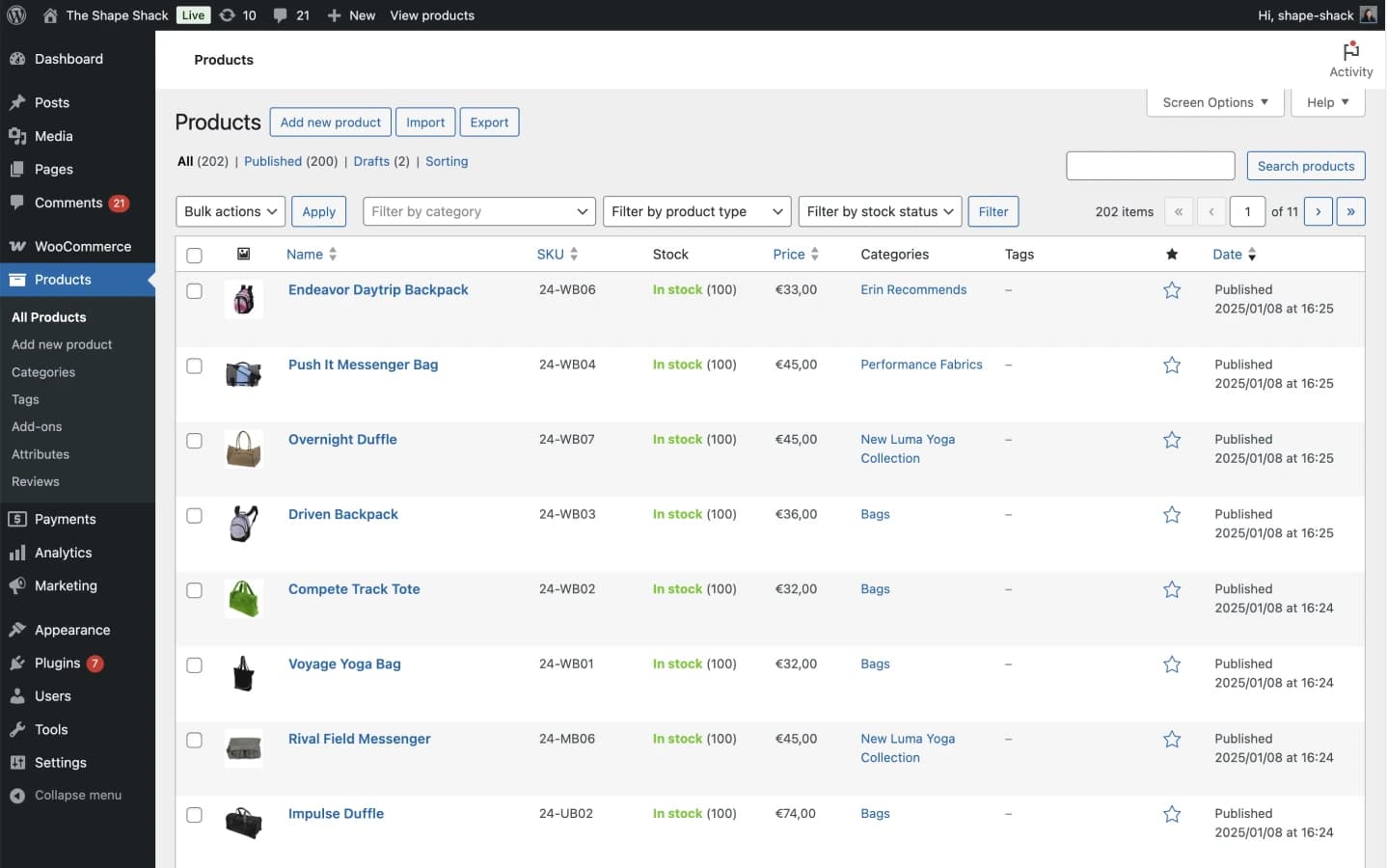
You can keep your domain and content. The theme or plugins may need changes for the basket and checkout. Hosting must also meet WooCommerce’s requirements.
Each size or colour can have its own price, SKU and stock level. A structured CSV can be imported in bulk. Keeping stock in sync with a warehouse system requires an integration.
Cash on delivery and bank transfer are built in. Card payments, automatic invoicing and a map for selecting pickup points may each need an extension for your chosen provider.
The core WooCommerce plugin is free. Budget for development, hosting, the domain, paid extensions and maintenance. The store operator is responsible for backups and updates.
I build the store on the plan you choose. Shopify hosts it and updates the core platform. The plan, theme and apps determine the features available to your customers.
It can work well when you want products, stock and orders in one place and your checkout requirements fit the plan you’ve chosen.
A clothing brand can organise products into collections, track stock by size and use the order list to prepare the day’s shipments.
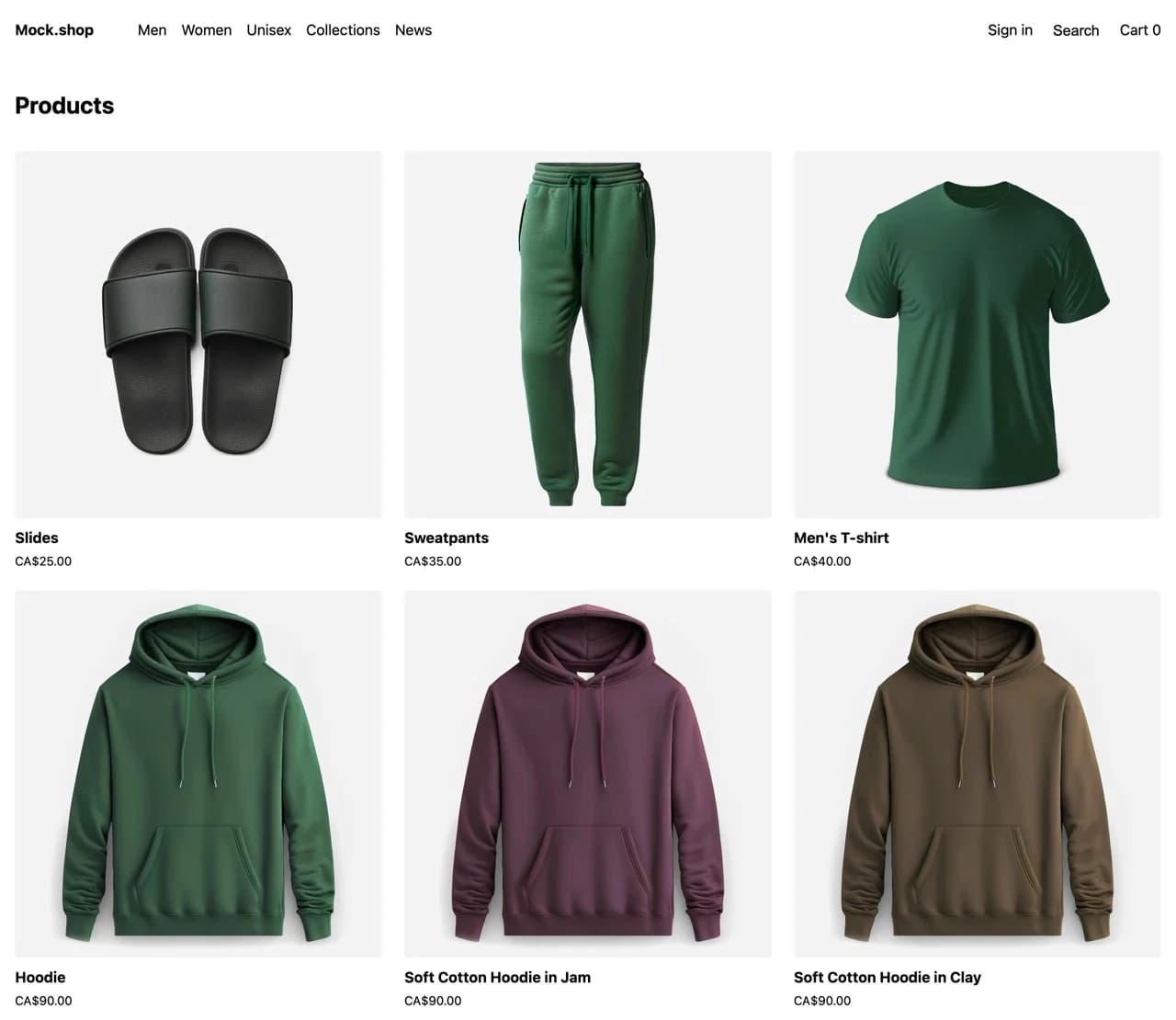
The theme provides the layout for product and collection pages. You can import the catalogue from a CSV. If another system manages stock, regular updates need an app or integration.
Eligible Hungarian merchants can use Shopify Payments. For business orders, we agree where customers enter their tax number and how your invoicing system receives it.
The store can offer cash on delivery. Surcharges and where a customer selects a pickup point depend on the app and plan. Apps that customise the shipping or payment steps directly require Shopify Plus.
Budget for the plan, any paid theme, invoicing or shipping apps, and payment processing. When you use an external online payment provider, Shopify may charge a transaction fee on top of the provider’s fee.
You get a working store on your chosen platform, with products, a configured checkout and access to manage it. The written quote lists how many products I’ll upload, which services I’ll connect and any custom features.
I build the homepage, category pages and product pages, then load the agreed products with the photos, descriptions and prices you supply. Each size or colour variant uses its own SKU and stock level.
For example, if the quote includes filters, shoppers can see just the medium T-shirts that are in stock.
Two sizes, separate stock
| Size | SKU | Stock |
|---|---|---|
| M | TEE-BLUE-M | 12 units |
| L | TEE-BLUE-L | 8 units |
Customers see the total at checkout, select a payment and delivery method, and receive an email confirmation. I set up the services listed in the quote, such as invoicing or pickup point selection, and add the customer notices you supply.
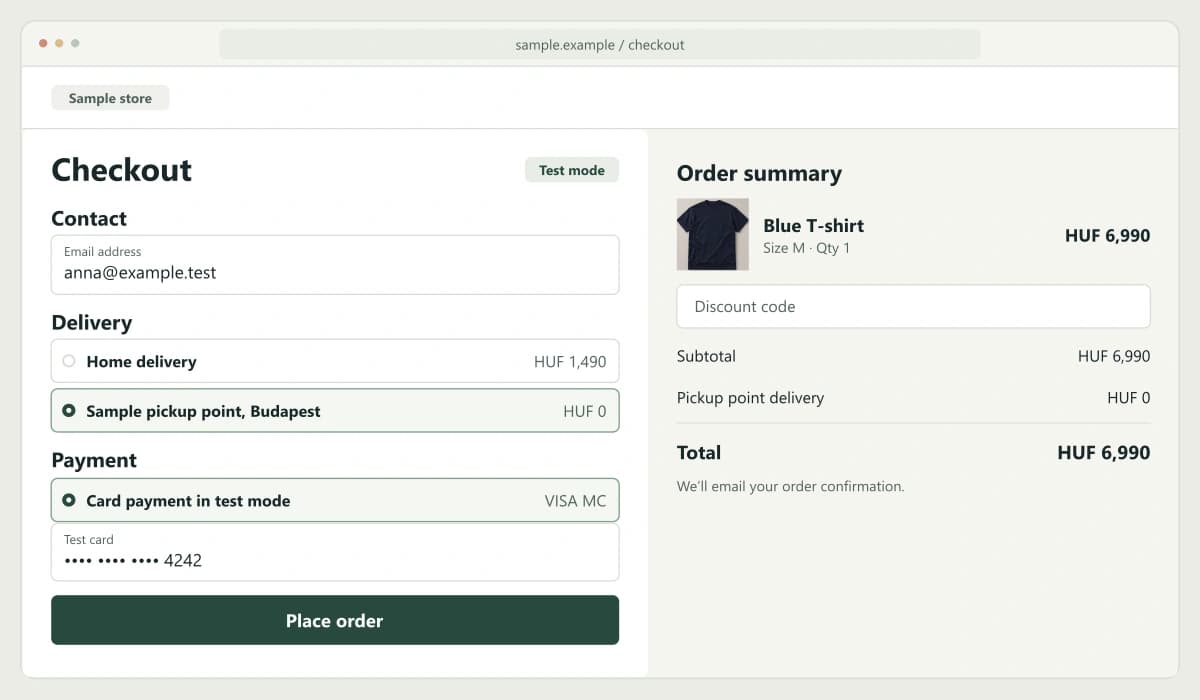
Customers can use the product pages, basket and checkout on a phone. Before handover, we place a test order using the agreed payment and delivery methods and check the confirmation. Public product and category pages go in the sitemap.
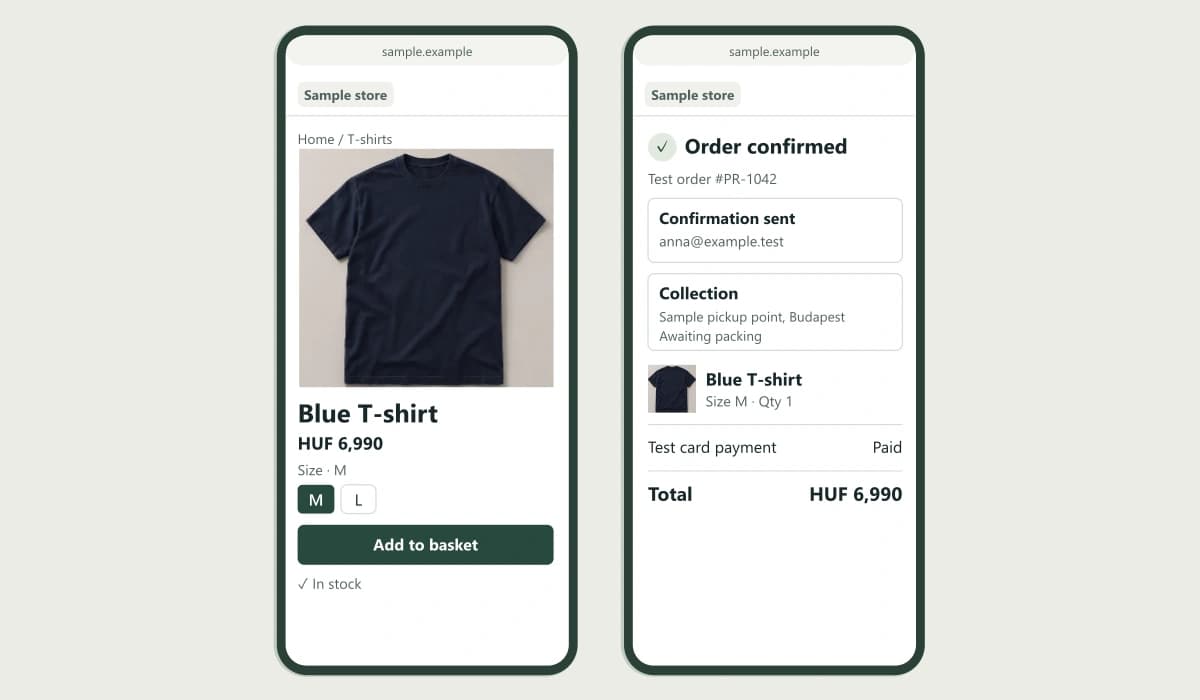
Your business gets the access it needs to run the store. During handover, the person managing it can use their own account to add a product, change its price or stock, and process a test order.
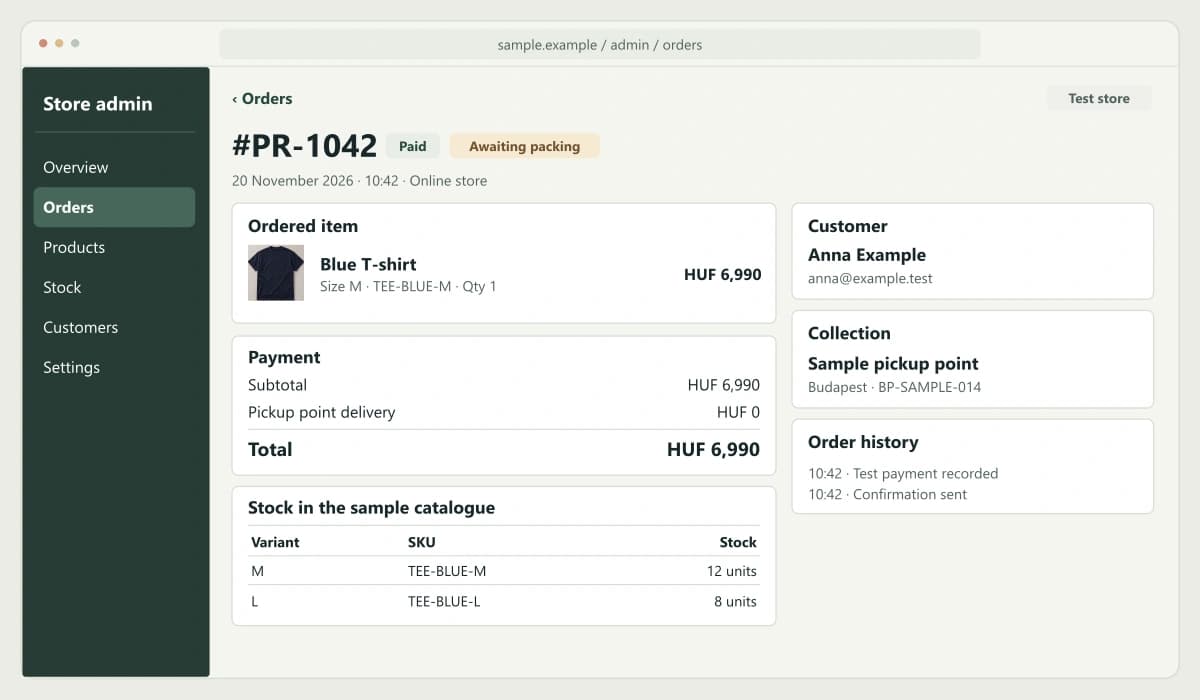
The development fee covers the agreed design and setup. External services and licences have their own fees.

Paid WooCommerce extensions, Shopify apps and themes have their own purchase or renewal fees. My development quote covers the agreed setup work.
You supply the approved terms and conditions, privacy notice and cookie notice. I add them to the store as part of the build.
Allow for the Shopify subscription or WooCommerce hosting, the domain and charges from payment, invoicing and delivery providers. You can request a separate maintenance quote after handover.
Start with your chosen platform and a few sentences about your products and how an order should work. If you’ve decided on a provider or need a specific checkout feature, include the details so I can price the work.
Tell me which platform you’ve chosen. If you have a website, send the address and list the pages or features you’d like to keep.
List the payment methods you plan to offer, such as card, cash on delivery or bank transfer. Include the names of any payment or invoicing providers you’ve chosen.
Tell me where you ship and whether customers need home delivery, pickup points or parcel lockers. Include the carrier’s name if you have one.
Give me the approximate product count and any size or colour variants. Say which product lists, photos, descriptions, prices and stock figures are ready.
Tell me whether the business is already trading or preparing to open. Include your target launch date if you have one.
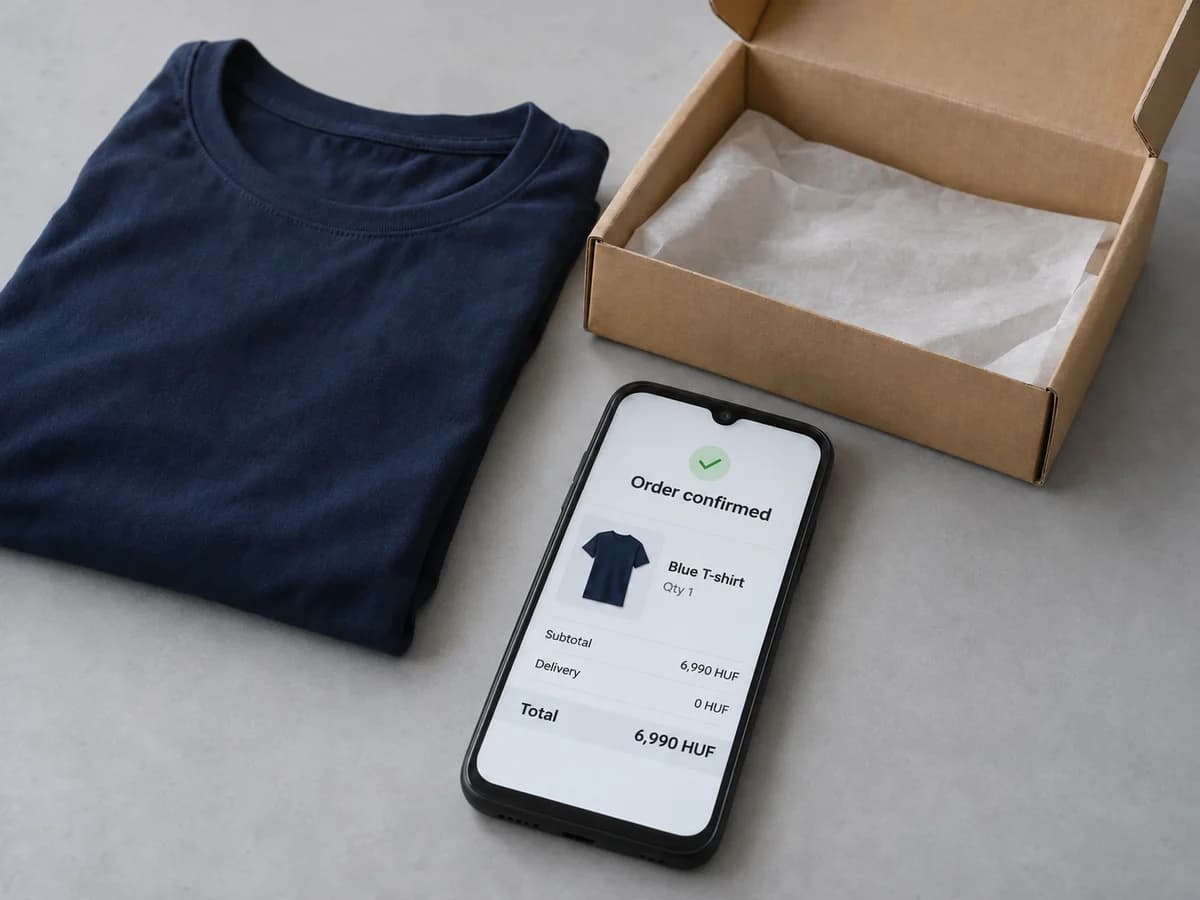
Qty 1 · TEE-BLUE-M
BP-SAMPLE-014Your written quote includes the development fee and schedule. These examples come from published offers by other Hungarian providers. Your project may cost more or less and take a different amount of time, depending on the scope and launch date.
WooCommerce with payment and shipping
Includes an invoicing integration. Hosting and the domain cost extra.
Basic Shopify setup
The fee covers store setup. The provider quotes separately for loading products.
Custom WooCommerce store
Up to eight pages with the main integrations. Loading products costs extra.
A separate Hungarian Shopify example gives 3–4 weeks for a store with 50–100 products and 5–7 weeks for more complex integrations.
The launch date depends on when product data and provider accounts are ready. I allow time for you to approve the preview and place a test order. Include any target opening date in your enquiry.
The published Hungarian examples range from HUF 390,000 to 790,000 excluding VAT in one-off or starting fees. I quote your store individually. The number of products, quality of the product data, payment, invoicing and delivery integrations, and custom features determine the fee.
The Hungarian examples give lead times of 3–10 weeks for stores of different sizes. Your written quote gives your schedule. Product data, active provider accounts and approval of the preview all affect launch. Send any planned opening date with your enquiry.
Allow for WooCommerce hosting or a Shopify subscription, the domain, paid extensions or apps, and maintenance. Your first-year budget should also cover the initial build and the payment, invoicing and delivery fees for your expected orders.
WooCommerce can work well as part of an existing WordPress site if you have arrangements for hosting, backups and updates. Shopify handles its own hosting and platform updates. Check which extensions or apps your chosen payment, invoicing and delivery methods need on each platform.
Yes, if the theme, plugins and hosting meet the store’s needs. The quote can include required changes or a hosting move as separate items.
Name the platform, approximate product count and preferred payment, invoicing and delivery methods. If you subscribe to Shopify already, include the plan. A few sample products, your current website and your target opening date help me price the work.
The quote specifies how many products I’ll load and who prepares the data. A structured Excel sheet can be converted to CSV for import. List product names, prices, SKUs, variants and stock levels. You can send the photos separately.
Yes, when your chosen providers support the platform and plan. You can keep existing providers where they have a suitable integration. Include their names and the features you need, such as cash on delivery, pickup point selection or shipping labels.
Invoicing and pickup point selection are common examples. You pay the app subscription separately. The development quote can cover configuring it for your store.
It can if there’s a suitable extension, app or interface for a custom integration. Name your system and list the data you want to exchange. A one-off product import and ongoing stock synchronisation are separate pieces of work.
Your business supplies the approved text. I add it to the store as part of the build.
I include public product and category pages in the sitemap so search engines can find them. Mention product feeds, Google Merchant Center or ongoing SEO in your enquiry if you need them.
Yes. Go from basket to confirmation using the agreed payment and delivery methods. You can try the checkout on your phone and use your own store account to process a test order during handover.
Yes. With the appropriate account you can add and edit products in the store dashboard. If an external inventory system controls stock, the integration determines where you update it.
Your business is the registered holder of the new domain and controls the store owner account. Development can use a separate login. We confirm who receives renewals and billing notices at handover.
Yes. You can request a separate quote for maintenance, updates and new features.
Tell me which platform you’ve chosen, roughly how many products you have and when you’d like to launch.
Hi Mihaly, I’d like a quote for a [WooCommerce / Shopify] store selling [product type]. We have about [number] products, with [variants]. We keep our stock records in [system / spreadsheet]. We’d like to accept [payment methods]. We use [provider] for invoicing and plan to offer [home delivery / pickup points]. We’d like to open the store in [month].